Killer awakenings have been around for some time now and with the introduction of many double Killer cards, players now have the opportunity to deal spectacular damage from a single card. In addition, players are now able to farm for Killer Latents from Arena 3 in order to add additional customization to their monsters.
While having the potential for wonderful burst damage, Killer awakenings do have some drawbacks as it becomes challenging control your damage as they cannot be “turned off.”
This article will discuss how Killer awakenings work, where to use them, their inherit drawbacks, and how the new Latent Tamadras will influence gameplay.
As a side note, Killer damage has been adjusted in game to display a larger white number to indicate the larger damage along with an explosion-like sound.
Video commentary
—video goes here—
What are killer awakenings?
Killer awakenings are a special kind of awakening that allows a monster to deal 3x damage to a particular type of boss. In addition, these killer awakenings can stack if the boss has multiple typings. Thus, a card with both Dragon and Devil Killer awakenings will deal 9x damage to Zaerog Infinity .
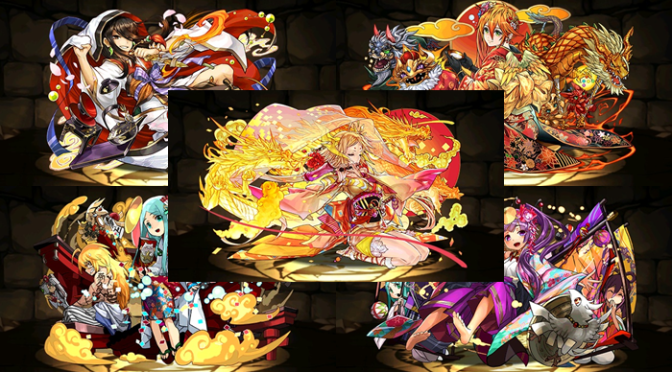
The New Year REM is returning to mark the Lunar New Year and this time, there will hopefully be no Monkeying around as this is the year of the Rooster. To mark this festive occasion, GungHo has released several new cards along with buffs to preexisting monsters.
Overall, the NY Collab is quite powerful as it does offer value at essentially every rarity bracket, but it does fall short to the standard that Bleach set. Regardless, the cards available may be of substantial value for many players and whether you choose to roll or not will come down to how much these cards can benefits your teams/box.
All players above rank 50 will receive 1 free pull on the New Year Rare Egg Machine.
Video commentary
—video goes here—
Rolls overview
New Year Rare Egg Machine Overview
8 star rolls
7 star rolls
6 star rolls
5 star rolls
4 star rolls
8 star rolls
NY Yomi God / Balance
4,372 HP / 1,536 ATK / 205 RCV
813 Total
Active Skill:
Enhance all orbs
+5 seconds to orb movement time for 3 turns
8 turn Cooldown
Leader Skill: 4x ATK for matched ATT when erasing 5 orbs with 1 enhanced. 2.5x ATK & 25% damage reduction when reaching 6+ combos 100x ATK / 43.75% damage reduction
Effective: 1.78x HP / 100x ATK / 1.78x RCV
Pros
Cons
100x ATK
43.75% damage reduction
2x ATK for Yomi with 7+ combos
Ample time extend
Can overcome combo shields
Flexible team building
Some damage control
Must make 6+ combos for shield
Deals 6.25x ATK to gain shield
Vulnerable to binds
Stalling is not as practical on fragile bosses
Must have an enhanced orb
Weak base active
Low sub value
Impressions
New Year’s Yomi is everything I could ever want for Awoken Yomi’s future reincarnated evolution as it preserves the fun 5o1e combo leader that is capable of dealing amazing burst damage along with defensive capabilities. Continue reading New Year REM Review and Analysis→
Version 9.6 is one of most highly anticipated patches to come to Puzzle and Dragons as it features numerous overhauls to existing game mechanics as well as introducing to new content. For the most part, this patch has greatly streamlined the Skill Inheritance (now named Assist System) as well as the Skill Up components of the game to reduce frustration and save stamina. In addition, we now have the opportunity to acquire Killer Latent Tamadras along with numerous quality of life improvements.
This article will focus on all the changes that occur through the King Tan system. I will cover the other material in a subsequent article as this has turned out longer than expected. You can read about the Skill Inheritance/Assist System changes HERE.
Video commentary
—video goes here—
King Tans
Skill Inheritance (now known as Assist System) was an effective mechanic that enabled players to add further customization to their teams to better tackle challenging content. However, the system was somewhat cumbersome as you required excessive amounts of Tans to transfer a skill. As such, the Tan process has been removed in order to cut down on the tediousness required.
Tans have been reworked to include a new ultimate evolution that will enable them to help you skill up your monsters. The Skill Up system was often one of the more infuriating aspects of Puzzle and Dragons. Whenever there is an aspect of luck or variance, people will often remember the times they were on the wrong end of the distribution curve regardless if they eventually normalized after numerous attempts. Continue reading Version 9.6 Update – King Tans Review and Analysis→
Skill Inheritance was introduced in May, 2016 and was one of the most game breaking aspects to come to Puzzle and Dragons. It provided players with an avenue to utilize duplicate monsters as well as lending customization to their favourite teams. Skill Inheritance would allow you to pick and choose what actives you wanted while providing the opportunity to use a stronger base card.
However, with the most recent patch, the Skill Inheritance system (renamed to Assist System) will be receiving an overhaul to make it easier to transfer skills around along with providing a stat bonus to same colour bases and inherits.
This article will only be focusing on the changes to Skill Inheritance along with how the actual process works and the other changes going live in the patch will be addressed separately. You can read more about King Tans HERE.
Video commentary
—video goes here—
What does Skill Inheritance do?
Skill Inheritance allows you to transfer an active skill from a 5+ star REM (or Collab REM) monster to a card of your choice. The receiving card is often referred to as the base while the donating monster is the assistant. While the assistant must be at least a 5+ star REM card, the base can be farmable or lower rarity. Furthermore, the assistant card must be max awakened (via Tamadras), but no longer needs to be max level.
In essence, Skill Inheritance allows you to customize your cards to your liking as you can utilize actives that come from normally non-synergistic monsters on a team. For example, you can inherit Meimei’s board changer onto your dark team in order to take advantage of her board changer on a dark-based team. Continue reading Version 9.6 – Skill Inheritance Changes & Updates→
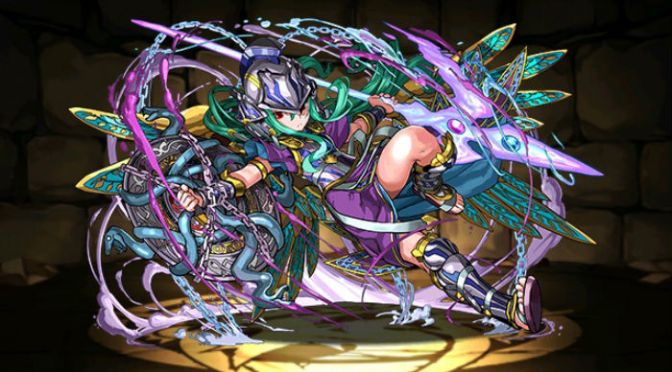
In the latest wave of PAD news coming out of JP, Dark Athena will be available from the MP shop for 750,000 Monster Points. This raises numerous questions ranging from “why such a high cost?” to “is she really that strong?” along with “will North America actually get her?” In this article, I will do my best to examine how Dark Athena could change the landscape of Puzzle and Dragons along with possible justifications for her extreme cost compared to previous MP cards.
Video commentary
—video goes here—
Dark Athena at a glance
Dark Athena God / Devil / Attacker
3,618 HP / 2,501 ATK / 0 RCV
862 Total
Active Skill:
Enhance all water & dark orbs
3 turn delay
11 turn Cooldown
Leader Skill: 1.5x HP & 3.5x ATK for God, Devil, and Attacker cards. 2x ATK & 2x RCV when matching Dark and Water orbs 2.25x HP / 49x ATK / 4x RCV
Pros
Cons
12.25 or 49x ATK
2,501 ATK
3 TPA for burst
Tanky Leader Skill
Forms one of the best teams in PAD
Can quickly clear content
Flexible team building
Bind immune
Damage enhance & delay
Can overcome combo shields
No evolution required
Comes ready to use
Must match water and dark for RCV
Stalling is not as practical
No SBR
Gemstone inherit semi required
Impressions
Dark Athena may look lackluster from a purely multiplier perspective; however, she is actually one of the strongest cards/leaders in the game. There are many factors that go into consideration when trying to determine what makes a strong leader, and Dark Athena covers almost all of them.
Dark Athena has one of the most unconditional leader skills which dramatically raises her consistency and speed when playing through both challenging and easy content. Simply having to match a single water and dark combo for 49x is trivial compared to the shenanigans other leads require. This ease of activation enables you to flood the board with dark orbs in order to better take advantage of Dark Athena’s three TPA awakenings. Continue reading Dark Athena Releasing for 750k MP→
The January 18th content update brought the release of three new Egyptian 1 Reincarnated evolutions along with a buff to the Snow Globe Noirs . However, many people are left with a feeling of disappointment as the wrong chicken received a new evolution. This review will quickly go over how the new Egyptian 1’s fit in today’s meta as they are in somewhat of an awkward place at the moment.
Video commentary
—video goes here—
Egyptian 1 background
The Egyptian 1 pantheon have all received reincarnated evolutions with the exception of Isis. This pantheon is one of the oldest in Puzzle and Dragons and for a while contained some of the strongest leaders the game had to offer. They went through a wild roller coaster ride ups and down for a few years. Presently speaking, they are in somewhat slump for a period of time now. Their main problem was the dependency on using an active skill to achieve their full multiplier which lowers their potency.
Active skill reliance places constraints on your clear potential as you have to either stall for actives or simply sacrifice a team slot for a quick charging ability. You are able to work around this in short dungeons or through coop in order to guarantee an active skill every turn but may struggle in dungeons with non-fixed spawns as it is harder to plan around.
Reincarnated Horus Devil / God / Attacker
3,875 HP / 2,164 ATK / 630 RCV
1,000 Total
Active Skill:
Enhance all fire orbs
+2s to orb movement time for 1 turn
4 turn Cooldown
Leader Skill: 4x ATK with 4 colours. 5x ATK with 5. 2x ATK & RCV when active skill is used 100x ATK / 4x RCV
Pros
Cons
Flexible Leader Skill
1,000 weighted stats
100x ATK
Short cooldown can inherit easily
Double SBR
Cover Fire & Water
Can use orb changers
Active skill reliant for damage
RCV is tied active skill
Damage is okay
Wrong chicken
Impressions
Reincarnated Horus has always traded a higher damage multiplier for greater consistency. This worked well when he was first released as there were fewer options to choose from along with most of the content not requiring amazingly high multipliers. However, in today’s meta, it is just not worthwhile as we now have access to board refreshes and time extends. Thus, the safety net is no longer required and is actually hurting his potential overall.
A 100x rainbow leader is perhaps average nowadays. Unfortunately, being average is not really good enough as you ideally want to have a card who excels in one particular aspect. Furthermore, having a large percentage of your multiplier tied to the usage of an active skill truly kills Horus’s potential. Without an active skill, you will only be able to achieve 25x ATK along with 1x RCV. If his RCV component was passively built into his leader skill, he could at least stall. Sadly, if you want to heal, you must also use an active and run the risk of killing the floor as well.
With all that being said, Horus has some merits, most notably his potential to act as a sub on various teams. His base cooldown is only 4 turns and allows you to easily inherit something over top along with covering the awkward Fire and Water elements. Furthermore, he has dual Skill Bind Resistance which can greatly ease team building constraints in solo mode. Finally, his dual TPA and massive base attack will allow Horus to achieve amazing burst damage.
Reincarnated Bastet Devil / God / Balance
4,760 HP / 1,757 ATK / 519 RCV
1,000 Total
Active Skill:
Mass attack for 3 turns
+2s to orb movement time for 1 turn
5 turn Cooldown
Leader Skill: 3x ATK with 5 combos. Scales up to 5x with 9 combos. 2.5x ATKwhen active skill is used 156.25x ATK
Pros
Cons
Scaling Leader Skill
1,000 weighted stats
156.25x ATK
Short cooldown can inherit easily
Flexible team building
Cute
Active skill reliant for damage
25x at 9 combos is weak
Damage is okay
Base active is weak
Impressions
Reincarnated Bastet is a massive improvement to her Awoken form as it significantly boosts her maximum damage from her previous 36x. In addition, you have a higher combo threshold for additional damage (7->9) along with a stronger multiplier when using an active skill. This further cements Bastet as a glass cannon leader as she still has no defensive multiplier component.
Like Horus, Bastet can only offer up to 25x ATK without an active skill and will make it challenging to use her efficiently in content that requires a large amount of damage repeatedly. However, when using an active skill, you are able to deal lethal damage as you can efficiently stack TPA awakenings. Granted you do lose out on your maximum damage multiplier, but if your team has enough TPA, the lower combo count can be justified. In fact, 7 combos (which is a realistic amount) will result in 100x ATK and that should be sufficient for most content as she is leading a mono wood team.
When compared to Acetet , Reincarnated Bastet wins out from a maximum multiplier point of view along without running the risk of flooding the board with wood and compromising combos. However, Acetet is superior from a combo perspective if no active skill is used. Acetet can achieve up to 64x ATK and gains her additional multiplier from matching 3 wood combos. This wood combo clause will usually result in an active skill being used, but will force you to bring more orb changers by comparison.
Reincarnated Bastet is better able to load up on utility-based actives as you do not require numerous wood orbs and can simply rely on the higher base multiplier and a TPA match. Another thing to consider is the risk of using God Killer on Acetet which could lead to the inability to kill certain absorb bosses (most notably Sopdet). Finally, Reincarnated Bastet has a shorter cooldown along with higher weighted stats.
Reincarnated Anubis Devil / God / Balance
5,048 HP / 1,450 ATK / 618 RCV
1,001 Total
Active Skill:
4 turns counterattack
8 turn Cooldown
Leader Skill: 5x ATK with 9 combos. 10x with 11 combos. 3x ATK when active skill is used 900x ATK
Pros
Cons
Has some damage control
1,001 weighted stats
900x ATK
Unbindable with
Active removes hazards
Niche counterattack
One true God
Inconsistent activation
Skyfall/praying required
No defensive multiplier
Active has a long cooldown
Impressions
Reincarnated Anubis is a significant improvement to his Awoken form as you only require 11 combos for maximum damage along with active skill usage and 9 combo damage being improved. This somewhat lowers the risk involved along with providing some form of damage control as you can activate 9x damage with an active skill.
A 6×5 board can provide at most 10 combos with a perfect distribution. Unfortunately, the more likely scenario is a board with 7-8 combos and after matching perfectly, praying for adequate skyfalls is required. This playstyle is incredibly risky along with inconsistent as there will be many times where the skyfalls are not in your favour.
Reincarnated Anubis brings up to 30x ATK by himself and has some potential to pair with 7×6 leaders even if they have lower damage multipliers. Unfortunately, the best option currently is to use Aten .
Shifting away from a leadership role, Reincarnated Anubis has strong potential on mono dark teams due to his bind immunity and recover bind awakening. This enables Anubis to clear 3 turns of binds with a single row of hearts. This would be more helpful if he had a heart generating active, but you can always inherit something over top his own active.
Finally, looking at Anubis’s active skill, it has a reasonably long cooldown for the benefits it provides. Most single orb changer plus hazard removal is pinned at 7 turns along with a turn of haste. Thus, you are trading haste and an additional turn for the occasionally useful counterattack. Counterattack has most applications against resolve bosses that have a 1% attack you can survive. This will enable you to instantly kill the boss as their ability will hit you and then have the counterattack hit and kill them. Perhaps the best example of this is against Zeus & Hera as their damage goes out before the healing component.
Snow Globe Noir Buffs
Snow Globe Noirs have been buffed to provide 3 million off-colour experience instead of the original 2. Hooray.
Conclusion
The new Egyptian 1 evolutions are nice, but not necessarily game breaking. They do add another dimension to leadership potential, but many players are probably disappointed by no Ra Dragon as he is one of the most anticipated evolutions to be released.
One of the most popular questions I see floating around the PAD community is “what makes a good leader?” or “is this a strong leader?” Now both of these questions are heavily loaded as the answer generally depends on your subs. A leader, no matter how powerful, is heavily reliant on your team composition, inherits, and plus egg investment.
There are many tier lists available that rank leaders based on various criteria, but they always assume the perfect team (regardless of how rare or hard to pull those monsters are). They also look at how consistent a leader performs in a variety of end game content instead of a single dungeon.
As such, tier lists should be taken with a grain of salt and be used as a starting base to determine if a leader has potential. You should then look up team building guides to see if you have ideal subs in order to successfully run that team.
The purpose of this article will be to further explore what merits a strong leader, what to look for in your monster box, and why consistency is invaluable when playing through harder content.
Being told something good is one thing, but understanding why is more important. You can read this article while thinking of your favourite leader to better understand why they are effective or ineffective.
Video commentary
—video goes here—
Factors that make a leader strong
Forewarning
The tier lists tend to not take player skill into consideration; however, you need to assess your own skill level as you need to be able to actually activate your leader skill on a consistent basis. A prime example of this was when Anubis was floating around on some lists. In theory, this works as his multiplier was at the time the highest available. Unfortunately, very few people could actually activate him on a consistent basis and was misleading to say the least.
In addition to ignoring player skill, tier lists assume the perfect team as that is the most fair way to compare various leaders. However, many of these teams require exotic subs (and inherits) that most players do not own and this will inevitably lead to a less than stellar performance. Continue reading What Makes a Good Leader in Puzzle and Dragons?→
I managed to record both level 9 and 10 clears on my Monday Twitch Stream. Hopefully it provides some insight into how you can approach these two dungeons and the various mechanics they have.
Challenge 10 with Lakshmi
Lakshmi is becoming one of my favourite leaders to use as she provides a healthy mixture of damage control, survivability, and large spike damage. She may not be as well suited for Arena 3, but is more than capable of handling Challenge 10’s. —
Challenge 9 with Reincarnated Shiva
My mom and Pancaaake managed to tackle Challenge 9 in coop with their Reincarnated Shiva team. It may have had many heart attacks, but they were successful in the end!
—
Conclusion
Hopefully these videos provide some inspiration or clarification for Challenge 9 and 10.
This set of Challenge Dungeons features a fixed team that utilizes Awoken Okuninushi along with intelligently chosen subs. The given team is more than capable of clearing this in solo mode, but I recommend you at least enter in coop to save 40 stamina.
Due to the nature of this being a fixed team dungeon, any account can enter with you and is a great way for underdeveloped accounts to acquire a Py.
Video clear & Strategy
Awoken Okuninushi is capable of achieving spectacular damage via high combo count and multiple dark combos. However, the team is very TPA oriented with Satsuki providing 3. This can allow for wonderful burst damage that can allow you to pierce through the high defense floor 1.
Your priority should be forming dark TPA along with trying your best to optimize your combos. You will most likely clear through most/all of the floors if done correctly and should use your actives to compliment your progression.
You should be using your leader’s actives for the 2 turn delay component, not enhance. With that in mind, you should simply delay a floor that would otherwise be problematic or as a means to survive the floor 2-3 preemptives by delaying floor 2 and healing.
The only time you need to use an active is on floor 5. Floor 5 has a 76% resolve and the easiest way to deal with this is by using Hades for his 25% gravity which will push the blue elephant under his threshold. The additional orb movement time is also welcomed.
Conclusion
I enjoyed this fixed team challenge outside of the high stamina cost. It is always a pleasure to play new teams that are intelligently designed and appropriate to today’s gameplay.
When making the decision to roll or save your magic stones, you need to determine if the featured pantheons can benefit or compliment your teams. Chasing for one specific monster is unwise as you will most likely be disappointed and should ideally have Godfests that overlap with many target cards. Remember all monsters that come out of the REM will qualify for Skill Inheritance so do not be too hasty when selling dupes. For a more detailed team building help, please refer to my full list Popular Leader’s and their Full Sub List Post. Lastly, to find more information about a specific pantheon or monster, refer to my Master List to better refine your search. If you are considering to purchase a Four Gentlemen card, please read my Review and Comparison HERE.
Introduction
To mark the 11 million downloads in North America, GungHo is throwing a modestly more special Godfest to mark this occasion. We have been experiencing 4x GFE for quite some time now and with only a smattering of 5x to try and entice us. However, these increased rates do not appear to be any more special than Godfests of old due to the significantly larger REM pool. It is my understanding (I could be wrong) that with each new pantheon (or GFE) added, the rates to roll a particular card go down. Thus, the increased rates are merely there to keep abreast with this “inflation.”
Regardless, this Godfest features a reasonable line up along with +33 to each roll (+11 to each stat).


 .
.







![[Review] January 18 Content Update – New Evolutions & Snow Globe Noir Buff](https://mantasticpad.com/wp-content/uploads/2017/01/capture2.png?w=672&h=357&crop=1)


![[Videos] Challenge 9 & 10 Clears](https://mantasticpad.com/wp-content/uploads/2017/01/capture1-horz1.png?w=672&h=369&crop=1)
![[Video] Challenge 8 – Fixed Team with Awoken Okuninushi](https://mantasticpad.com/wp-content/uploads/2017/01/capture1-horz.png?w=672&h=372&crop=1)


 Mantastic Puzzle and Dragons